The Liberica coffee variety (Coffea liberica) stands as one of the most remarkable and important coffee species in the world.
Known for its giant beans, distinct aroma, and exceptional adaptability, Liberica represents both the past and the future of coffee.
Though it makes up less than 2% of global coffee production, its resilience to heat, drought, and disease makes it increasingly vital in the era of climate change.
🌍 Origin and Historical Background
Coffea liberica originated in the tropical forests of West and Central Africa, particularly Liberia, from which it takes its name.
The species was introduced to Southeast Asia in the late 19th century after a leaf rust epidemic devastated Arabica crops.
Liberica thrived in hot, lowland areas, especially in the Philippines, Malaysia, and Indonesia, where it became a cornerstone of local coffee culture.
In the Philippines, it is famously known as “Kapeng Barako,” celebrated for its bold flavor and deep aroma.
🌿 Botanical Characteristics
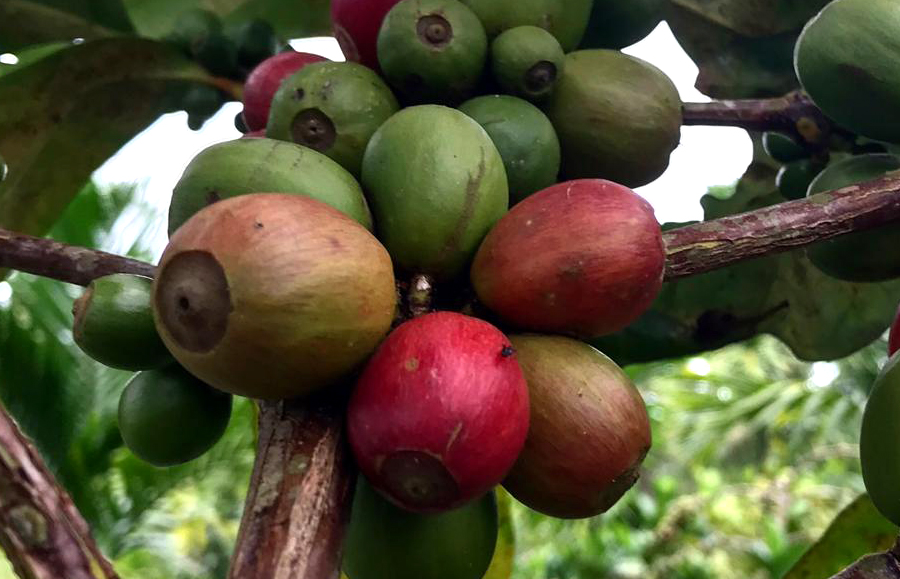
The Liberica tree is one of the largest and hardiest coffee plants in the world, easily recognizable by its size and leaf shape.
Main characteristics:
- Tree height: Up to 15 meters (can be pruned to 3–5 m for cultivation)
- Leaves: Broad, dark green, and leathery
- Cherries: Large and oval with thick skin
- Beans: Asymmetrical, elongated, and among the biggest of any coffee species
- Root system: Deep and strong — highly drought-resistant
Because of these traits, Liberica can thrive where Arabica struggles, making it ideal for lowland tropical environments.
☕ Flavor Profile
The flavor of Liberica coffee is unique and easily distinguishable from Arabica or Robusta.
It delivers a strong, complex, and floral cup, often described as fruity, woody, and slightly smoky.
Typical tasting notes:
- Full-bodied and syrupy
- Low to medium acidity
- Aromas of floral, nutty, and woody tones
- Notes of dark chocolate, jackfruit, and spice
- Sweet, lingering finish
Its distinctive taste may surprise those used to Arabica, but Liberica’s depth and aroma have earned it a loyal following among coffee connoisseurs.
🌱 Growing Conditions
Liberica is known for its resilience and adaptability, capable of growing in harsh tropical conditions.
Ideal conditions:
- Altitude: 200–800 meters
- Temperature: 22–30°C
- Rainfall: 1,500–2,500 mm annually
- Soil: Slightly acidic, well-drained tropical soils
- Sunlight: Prefers full sun or partial shade
Its deep roots make it tolerant of drought and nutrient-poor soils, while its thick leaves protect it from fungal infections and pests.
🌾 Agricultural Advantages
✅ Highly resistant to pests and coffee leaf rust
✅ Adapts to heat and humidity better than Arabica
✅ Tolerates drought and poor soils
✅ High-yield potential under proper management
✅ Long lifespan and low maintenance
These characteristics make Liberica a promising solution for regions affected by climate change and declining Arabica yields.
⚠️ Challenges in Cultivation
Despite its strengths, Liberica is not without its challenges.
❌ Tall tree height makes harvesting difficult
❌ Thick fruit skin requires longer processing time
❌ Irregular fruiting cycles
❌ Distinct flavor not always preferred by mainstream markets
❌ Limited knowledge among farmers outside Asia and Africa
However, as the demand for unique and sustainable coffees grows, Liberica is regaining attention from both farmers and roasters.
🧬 Sub-Varieties of Liberica
Over time, several regional and genetic variations of Coffea liberica have developed:
1. Liberica var. dewevrei (Excelsa)
- Sometimes referred to as Coffea excelsa.
- Smaller tree and bean size, with a fruitier and tangier flavor.
- Found in Vietnam, Indonesia, and Central Africa.
2. Liberica var. dewevrei Barako (Kapeng Barako)
- Grown mainly in the Philippines (Batangas, Cavite).
- Strong, woody, and floral cup profile.
- Symbol of Filipino coffee heritage.
3. Liberica var. robusta (Nganda or Koukou)
- Native to West and Central Africa.
- Sweet, earthy flavor with mild bitterness.
- Excellent adaptability and vigor.
🌍 Modern Cultivation Regions
Today, Liberica is cultivated mainly in:
- Philippines 🇵🇭 — “Kapeng Barako,” known for bold flavor and cultural heritage.
- Malaysia 🇲🇾 — Produces distinctive, fruity Liberica coffees.
- Indonesia 🇮🇩 — Especially in Sumatra and Java.
- Africa 🌍 — Liberia, Uganda, Sierra Leone, and Congo (wild populations).
These regions preserve the genetic diversity of Liberica and promote its commercial revival.
☕ Uses in Coffee Blends
Liberica’s unique qualities make it a valuable blending coffee:
- Adds aromatic depth and fruity notes to espresso blends
- Enhances body and sweetness in cold brews
- Offers a distinct identity in single-origin roasts
Specialty roasters are now showcasing 100% Liberica coffees for their floral aroma and complex character.
🌍 Importance for the Future of Coffee
With climate change threatening traditional Arabica crops, Liberica’s genetic strength and adaptability make it crucial for the future of coffee sustainability.
Its natural resistance to diseases and high tolerance for heat and drought provide valuable traits for breeding new hybrid varieties.
Scientists and growers are now exploring Liberica–Arabica hybrids that could combine quality, resilience, and productivity.
❤️ Final Thoughts
The Liberica coffee variety (Coffea liberica) is much more than a rare species — it’s a symbol of resilience, flavor diversity, and heritage.
Its exotic aroma, large beans, and climate adaptability make it one of the most important varieties in the modern coffee world.
As specialty coffee continues to evolve, Liberica stands ready to redefine what great coffee can be — bold, aromatic, and sustainable.
☕ Liberica coffee — the giant of flavor, the future of resilience.
DeliciousPath: Enjoyment in Every Moment
Explore the Gourmet on Board category for exquisite flavors that elevate your meals, even when you’re on a boat, and the Coffee category for aromatic coffee blends that make every moment special. DeliciousPath is here to turn every experience into something unforgettable!