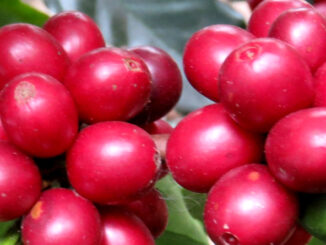
The Gesha coffee variety (also spelled Geisha) is one of the most celebrated and sought-after coffees in the world.
Renowned for its floral aroma, delicate sweetness, and elegant complexity, Gesha represents the pinnacle of Arabica coffee quality.
This exceptional variety has roots in Ethiopia, the birthplace of coffee, but it rose to global fame in Panama, where its unique flavor captivated judges, roasters, and coffee enthusiasts alike.
🌍 Origin and History
The Gesha variety originated in the Gori Gesha forest of southwestern Ethiopia, part of the region believed to be coffee’s ancient homeland.
In the 1930s, British researchers collected Gesha seeds during expeditions in Ethiopia and sent them to Tanzania and Kenya for cultivation and disease resistance studies.
Later, in the 1950s, these seeds made their way to Panama, where they were planted by the Peterson family on their Hacienda La Esmeralda farm in Boquete.
For decades, Gesha remained relatively unknown — until 2004, when a Gesha lot from La Esmeralda won the Best of Panama competition, setting a new world record for coffee auction prices.
Since then, Gesha has become a symbol of excellence and is often referred to as the “Champagne of Coffee.”
🌿 Botanical Characteristics
The Gesha variety is a distinct Arabica cultivar with unique physical and genetic traits.
It’s known for its long, narrow leaves, tall growth, and low yield, but what truly sets it apart is its cup quality.
Plant features:
- Species: Coffea arabica
- Origin: Ethiopia (Gori Gesha forest)
- Plant height: Tall and upright
- Leaves: Long and slender, often bronze-tipped
- Cherries: Elongated and uniform
- Yield: Moderate to low (quality-focused)
- Resistance: Moderate; sensitive to wind and cold
Because of its delicate nature, Gesha requires high-altitude cultivation and careful processing to reach its full flavor potential.
🌾 Where Gesha Coffee Grows
Today, Gesha is cultivated in both Ethiopia and Panama, as well as in Costa Rica, Colombia, Guatemala, and Peru.
However, the most famous and award-winning lots still come from Panama’s highlands, especially the Boquete and Volcán regions.
Key growing regions include:
- Gori Gesha, Ethiopia: The original wild source, offering floral and fruity notes with complexity.
- Boquete, Panama: Produces extremely clean, jasmine-like, and sweet Gesha coffees.
- Costa Rica & Colombia: Balanced and bright, with citrus and honey tones.
The best Gesha coffees grow at 1,600–2,000 meters, where cool temperatures and rich volcanic soil nurture slow cherry development — perfect for building aroma and sweetness.
☕ Flavor Profile
Gesha coffee is often described as one of the most aromatic and flavorful coffees ever discovered.
It’s known for its tea-like body, floral aroma, and exceptional clarity.
Typical tasting notes include:
- Strong jasmine and bergamot fragrance
- Flavors of honey, peach, apricot, and tropical fruit
- Hints of lemongrass, citrus, and floral tea
- Sweet, clean finish with medium body
- Bright, complex acidity similar to fine white wine
When brewed properly, Gesha delivers a refined and layered cup unlike any other coffee variety.
🌸 Processing Methods
Because Gesha’s flavor is so delicate, the processing method has a major impact on its final profile.
Common processing methods:
- Washed: Produces a clean, bright, and floral cup (typical of Panama Gesha).
- Natural: Enhances sweetness and fruitiness, adding depth to the flavor.
- Honey process: Balances clarity and sweetness, with syrupy texture.
Producers often experiment with fermentation techniques and controlled drying to bring out different flavor nuances — from tropical fruit to jasmine and citrus.
🌏 Ethiopian Gesha vs. Panamanian Gesha
Though they share the same genetic origin, Ethiopian Gesha and Panamanian Gesha have distinct characteristics shaped by terroir and cultivation.
Ethiopian Gesha:
- Grown wild or semi-wild in the Gori Gesha forest.
- Floral, fruity, and complex — often with wild, earthy tones.
- Represents the ancient, natural side of the variety.
Panamanian Gesha:
- Carefully cultivated at high altitudes (Boquete & Volcán).
- Refined, clean, and incredibly aromatic — jasmine, peach, and honey.
- Known for record-breaking quality and prices.
Both are exceptional, but Panamanian Gesha remains the benchmark for specialty coffee competitions worldwide.
💎 Awards and Recognition
Gesha coffee has redefined global coffee standards, breaking multiple records in international auctions.
Panamanian Gesha, in particular, has fetched prices exceeding $1,000 per pound, making it one of the most expensive coffees ever sold.
It has repeatedly won the Best of Panama and Cup of Excellence competitions, establishing Panama as a leader in ultra-premium coffee production.
☕ Brewing Recommendations
To fully appreciate Gesha’s complexity, it’s best brewed using methods that highlight its clarity and aroma.
Recommended brews:
- Pour-over (V60, Chemex): Best for showcasing floral and fruity notes.
- AeroPress: Brings out sweetness and body.
- Cold brew: Offers a refreshing, delicate floral cup.
Use a light roast and filtered water around 92–94°C (198–201°F) for optimal extraction.
Avoid milk or sugar — Gesha’s natural sweetness and aroma shine best on their own.
❤️ Final Thoughts
The Gesha coffee variety is a masterpiece of nature — elegant, aromatic, and unlike any other.
From its wild Ethiopian roots to the highlands of Panama, Gesha tells a story of discovery, evolution, and passion for perfection.
Its delicate jasmine aroma, tea-like body, and bright fruit notes have made it the gold standard of specialty coffee.
☕ Gesha coffee — born in Ethiopia, perfected in Panama, and loved by the world.
DeliciousPath: Enjoyment in Every Moment
Explore the Gourmet on Board category for exquisite flavors that elevate your meals, even when you’re on a boat, and the Coffee category for aromatic coffee blends that make every moment special. DeliciousPath is here to turn every experience into something unforgettable!